Coverage gaps
What a gap in coverage does to your car insurance price
Letting a policy lapse, even for a few weeks, can cost you twice: once in state penalties and again in the next premium. Here is how both work and how to close the gap.
By Guardbrook Editorial Team Updated 7 min read
At a glance
- Virginia noncompliance fee
- $600
- North Carolina penalty
- $50–$150 plus $50 fee
- Florida reinstatement fee
- $150 to $500
- Missouri insurers may act
- After a 30-day lapse
Bottom line
A lapse is any stretch of time when a car you own and register has no liability coverage in force. States treat it as driving, or keeping a car, uninsured: Virginia charges a $600 noncompliance fee and requires an SR-22 for three years, and Florida suspends your license and registration and charges $150 to $500 to reinstate them. Insurers notice too. Missouri's insurance department, for example, notes that state law doesn't stop an insurer from placing a driver in a high-risk policy after a 30-day lapse. The fix is simple: start a new policy before the old one ends, and never let a cancellation notice sit unanswered.
What counts as a lapse
A lapse is a period when the coverage your state requires isn't in force on a car you own or have registered. It doesn't have to be long, and it doesn't have to be on purpose. Most gaps start with something ordinary:
- A missed payment. The insurer cancels for nonpayment after its notice period, and the policy ends on that date whether or not you read the letter.
- A switch done in the wrong order. You cancel the old policy first and the new one starts a day, or a week, later.
- A car you stopped driving. New York's DMV says coverage has to stay in force as long as the registration is valid, even if the car sits unused, and Florida's motor vehicle agency tells owners to turn in the plate before cancelling.
- A move or a sale. You sell a car, buy the next one weeks later and are uninsured in between.
The gap runs from the moment one policy ends to the moment the next one starts. Your declarations page lists the effective and expiration dates; compare the two before you cancel anything.
Many states now check coverage electronically. North Carolina insurers must tell the NCDMV when a policy lapses or is canceled, and Virginia's DMV checks insurance on Virginia-registered vehicles with insurers. A gap you didn't notice can still reach the state.
How a gap moves your premium
When you apply, insurers ask whether you have been insured and for how long, and a recent gap can move you into a more expensive tier. How much depends on the insurer's filed rating plan and on how long the gap lasted, so there is no single figure to expect. What state regulators do say is that the effect is real. Missouri's Department of Commerce and Insurance notes that state law doesn't stop an insurer from placing a driver in a high-risk policy after a 30-day lapse.
Some discounts also depend on staying insured. In Maryland, the good-driver discount insurers must offer goes to drivers with no moving violation carrying more than one point and no traffic accident in the past three years, and it also requires continuous coverage from that insurer. If a gap leads to a license suspension, the suspension itself goes on your driving record, which affects prices for years.
What states charge for driving uninsured
| State | What a lapse can cost | Agency |
|---|---|---|
| Virginia | Operating an uninsured vehicle is a Class 3 misdemeanor. License and registration are suspended until a $600 noncompliance fee is paid, and reinstatement requires an SR-22 filing for three years | Virginia DMV |
| North Carolina | The plate can be revoked if you don't answer a termination notice in time (30 days from October 1, 2026). Restoring it costs a $50, $100 or $150 civil penalty plus a $50 fee | NCDMV |
| Florida | Suspension of license and registration; reinstatement costs $150 the first time, $250 the second and $500 after that (within three years) | FLHSMV |
| Missouri | A suspended registration and possibly a suspended driver's license | Missouri Department of Commerce and Insurance |
| Louisiana | An uninsured driver can't recover the first $15,000 of injury damages or the first $25,000 of property damage, even when the other driver caused the crash | Louisiana Department of Insurance |
An SR-22 is proof of insurance that your insurer files with the state for you. It isn't a type of coverage: it certifies that you carry at least the liability your state requires. Virginia requires one for three years after an uninsured-driving suspension. New Hampshire's DMV requires one after any DWI, after leaving the scene of an accident or after a second reckless operation offense, and says a license or registration can't be restored or kept until the filing is in place.
The state amounts are only part of the cost. Any damage you cause while uninsured is yours to pay, and the suspension or offense behind an SR-22 stays on your record for insurers to see. Our state pages for Virginia and North Carolina show the rules alongside what drivers there pay on average.
If you don't have a car right now
A gap is harder to avoid when you have nothing to insure: you sold a car, moved to a city, or share a household vehicle you aren't listed on. Before you go without coverage, ask two questions of an agent or of the insurers you are likely to use later.
- Is a non-owner policy available, and would it count as prior coverage? Some insurers offer liability coverage for people who drive but don't own a car; availability and terms vary. Whether a later insurer treats it as continuous coverage is its own rule, so ask before you buy.
- Can you stay listed on a household policy? If you drive a family car regularly, being listed as a driver may keep your history unbroken.
If the car is still registered, check your state's rule before dropping coverage. In states like New York and Florida, the plate or registration has to be turned in first, or the state treats the car as an uninsured vehicle.
How to avoid a lapse, or recover from one
- Start the new policy first. When you switch, set the new policy to begin on or before the day the old one ends, then cancel the old one in writing. Our guide to switching insurers without a gap walks through it.
- Put payments on autopay and keep the insurer's notices going to an address and email you actually read.
- Answer a cancellation or termination notice right away. Call the insurer before the date on the notice and ask what it takes to keep the policy in force. After that date, the gap has already started.
- If you have lapsed, buy coverage now and answer the application accurately. Insurers ask about prior coverage, and every day without it adds to the gap.
- Compare several quotes. Insurers weigh a gap differently, so compare quotes line by line. If regular insurers refuse you, your state's assigned-risk plan is the fallback.
Questions drivers ask
How long can a car insurance gap be before it matters?
There is no national rule. States treat any period without required coverage on a registered car as a violation, and each insurer decides how it prices a gap. Missouri's insurance department notes insurers there may place a driver in a high-risk policy after a 30-day lapse.
Will my state find out if my insurance lapses?
Often, yes. In North Carolina insurers must report lapses and cancellations to the NCDMV, and Virginia's DMV checks coverage electronically with insurers.
Do I need insurance on a car I am not driving?
If it is registered, usually yes. New York requires coverage as long as the registration is valid, even if the car sits unused, and Florida tells owners to turn in the plate before cancelling.
Can I get insured after a lapse?
Yes. Regular insurers may charge more or place you in a higher-risk tier. If none will sell you a policy, your state's assigned-risk plan is the fallback.
Where the figures come from
- Virginia DMV — Insurance requirements
- Code of Virginia § 46.2-707 — Operating an uninsured motor vehicle
- NCDMV — Insurance requirements
- Florida Department of Highway Safety and Motor Vehicles — Insurance requirements
- Florida Statutes § 324.0221 — Suspension for failure to maintain required security
- Missouri Department of Commerce and Insurance — Consumer guide to automobile insurance
- Missouri Department of Commerce and Insurance — Auto insurance FAQs
- New Hampshire DMV — Insurance requirements / SR-22
- New York DMV — Insurance requirements
- Louisiana Department of Insurance — Auto insurance
- Maryland Insurance Administration — A Consumer Guide to Auto Insurance
Facts on this page were checked against these sources on October 26, 2026. Penalties are state examples and change with legislation; North Carolina's 30-day response window applies from October 1, 2026.
Have your rate shopped
Averages can't price your car and your record. Tell us the basics of your policy and Guardbrook passes them to licensed insurance agents and insurers who can quote it; you decide whether to switch.
- 1 Your cars, drivers and current policy.
- 2 How agents can reach you, and your consent.
- 3 A licensed insurance agent or insurer contacts you with quotes. Your policy stays as it is until you decide to switch.
Guardbrook is not an insurance company or agency and doesn't sell, quote or bind policies. You pay Guardbrook nothing; the licensed insurance agents and insurers who contact you set their own prices and terms. How we make money.
Read next
-
Shopping guide
Switching insurers without a gap
Start the new policy first, cancel in writing, tell the lender. A North Carolina lapse can cost up to $200 in fees.
-
Price factor
Driving record
Tickets and at-fault crashes raise prices; OR and MD look back 3 years, CA Good Driver rates are 20%+ lower.
-
State cost
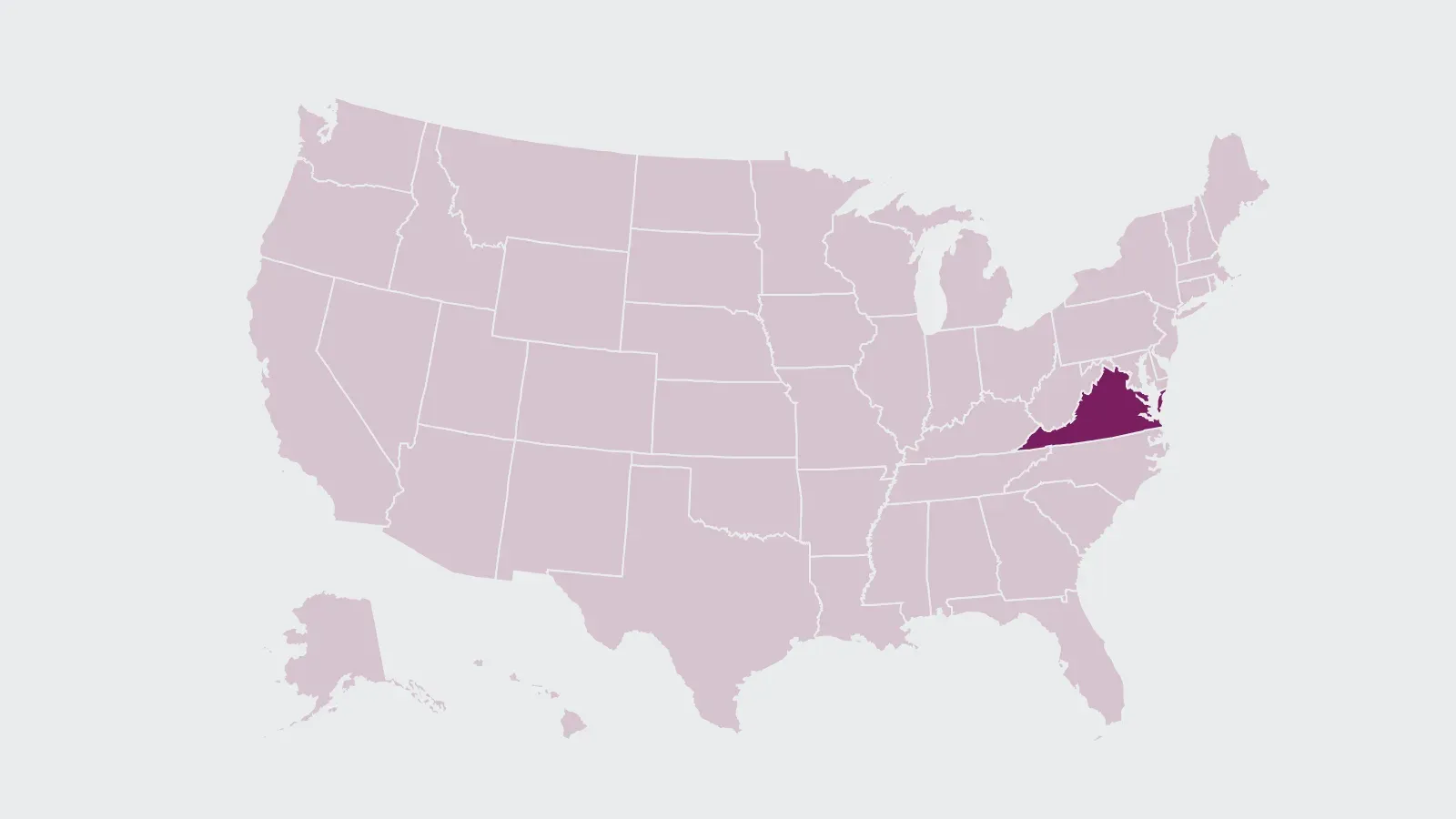
Virginia
$1,114 average spend in 2023 (−13% vs. U.S.); full coverage $1,238; 50/100/25 minimum since 2025.