Under $1,000 tier
What car insurance costs in North Carolina
The average North Carolina premium against the U.S., the higher minimums that arrived in 2025, and a rate system unlike most other states'.
By Guardbrook Editorial Team Updated 6 min read
At a glance
- Average yearly spend, 2023
- $925
- Change from 2022
- +10%
- Minimum liability limits
- 50/100/50
- Uninsured drivers, 2023
- 11.8%
Bottom line
North Carolina drivers spent an average of $925 per insured car in 2023, about 28% less than the U.S. average of $1,282, and full coverage averaged $1,097. Policies issued or renewed after July 1, 2025 must carry 50/100/50 liability, up from 30/60/25, plus uninsured and underinsured motorist coverage. Rates for private passenger cars are proposed by the North Carolina Rate Bureau on behalf of its member companies, and insurers can deviate from them.
The North Carolina bill, line by line
Guardbrook
Average car insurance bill, 2023
North Carolina
Liability$448
Collision$441
Comprehensive$208
Full coverage$1,097
Average spend per car$925
Compared with the U.S.−28%
Uninsured drivers11.8%
Average yearly premiums per insured car (NAIC); uninsured share: Insurance Research Council estimate. Averages, not a quote. Where these numbers come from
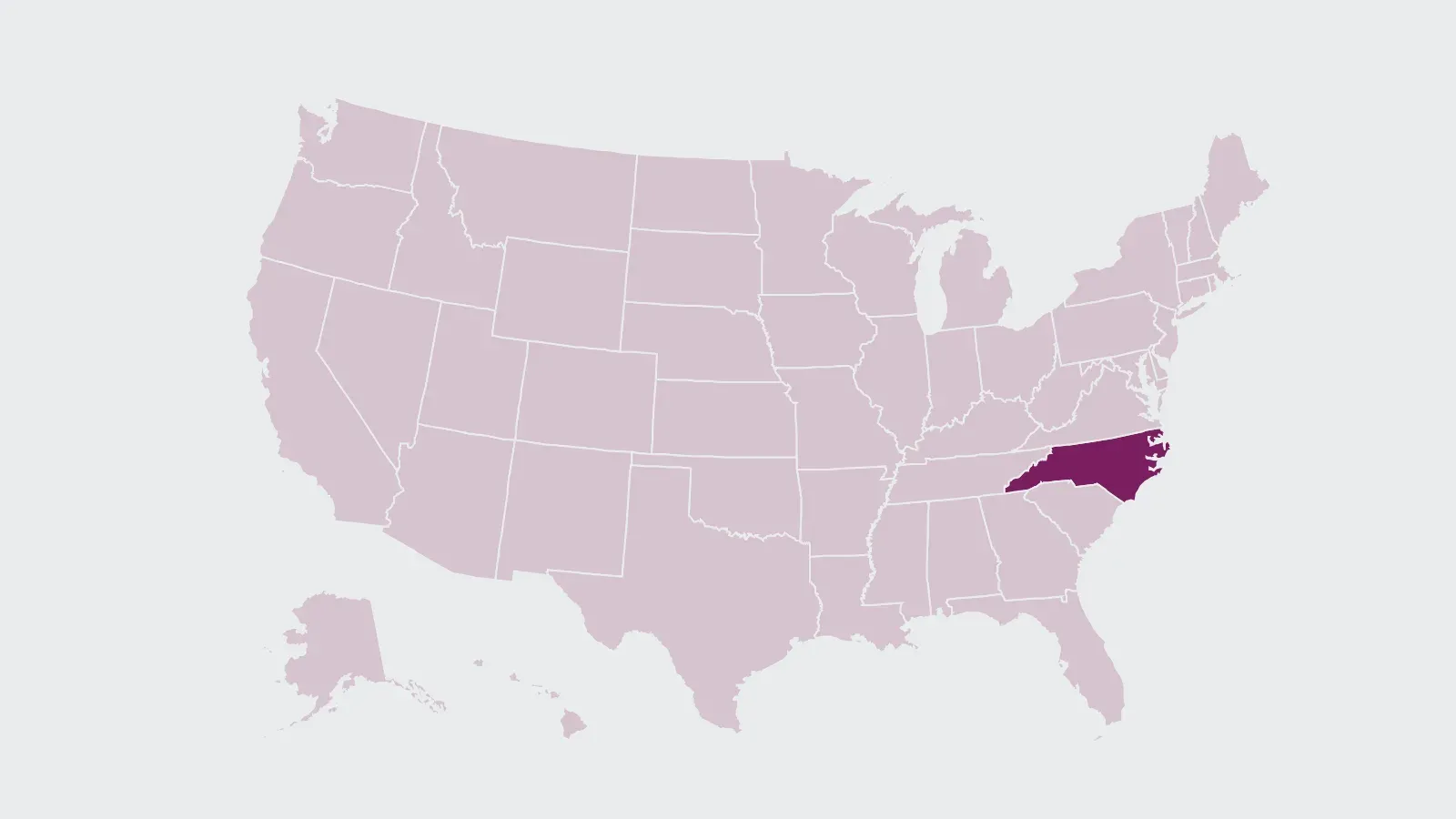
Price tier on the map
Under $1,000 a year
- Minimum liability limits
- 50/100/50
- For policies issued or renewed after July 1, 2025 (30/60/25 before); UM/UIM required under G.S. 20-279.21
- Credit-based insurance scores
- Allowed, not the sole reason to cancel
- NCDOI consumer guide: credit can't be the only reason to end a policy in force over 60 days
- Regulator
- North Carolina Department of Insurance
North Carolina's bill against the U.S.
The National Association of Insurance Commissioners (NAIC) reports average premiums for each state from insurers' filings. North Carolina's 2023 average expenditure was $925 per insured car, 10% above the $839 of 2022. Expenditure covers liability-only and fully insured cars together; the combined premium for a car with liability, collision and comprehensive was $1,097.
| Coverage | North Carolina | United States |
|---|---|---|
| Liability | $448 | $737 |
| Collision | $441 | $464 |
| Comprehensive | $208 | $238 |
| All three (combined premium) | $1,097 | $1,438 |
| Average expenditure | $925 | $1,282 |
Liability is where North Carolina differs most: $448, about 39% under the national figure, which leaves it barely above collision at $441. Collision runs about 5% below the U.S. number and comprehensive about 13% below. All of these figures come from 2023, before the minimum limits rose, so they don't show what the higher floor does to a bill. Your own price still depends on your record, car and location; see how your driving record sets a price.
The coverage North Carolina requires
According to the NCDMV, policies issued or renewed after July 1, 2025 need at least $50,000 for injury to one person, $100,000 for injuries to two or more people and $50,000 for property damage. Older policies carried 30/60/25 until they renewed. The property damage floor doubled, from $25,000 to $50,000, which matters if you hit a newer car.
- Uninsured and underinsured motorist coverage is required under G.S. 20-279.21 on every policy, including those well above the minimums.
- Collision and comprehensive are optional under state law, though a lender will usually require them.
- Continuous coverage is watched: insurers must tell the NCDMV when a policy lapses or is canceled, and the owner then gets a termination notice.
Letting coverage lapse costs money on its own. From October 1, 2026 you have 30 days to respond to a termination notice (10 days before that). Ignore it and the plate can be revoked; getting it back means a civil penalty of $50, $100 or $150, depending on prior lapses in the last three years, plus a $50 restoration fee. Our page on insurance lapses explains what a gap does to future quotes.
How North Carolina sets car insurance rates
North Carolina uses a rate bureau. The North Carolina Rate Bureau, created by the General Assembly under Article 36 of Chapter 58, proposes rates for nonfleet private passenger auto insurance on behalf of its member companies. By February 1 of each year it files its data and any proposed rate changes with the Commissioner of Insurance, and new rates can take effect no sooner than 210 days after the Commissioner receives the filing unless both sides agree to an earlier date; the law also provides for hearings. Individual insurers can deviate from bureau rates, and the bureau posts periodic deviation updates.
Insurers may use credit scores in setting premiums, the North Carolina Department of Insurance (NCDOI) explains in its consumer guide. Credit can be the only basis for a discount, but it can't be the only reason to terminate a policy that has been in force more than 60 days. Read more about credit-based insurance scores.
The Reinsurance Facility for high-risk drivers
North Carolina's safety net works behind the insurer. Companies can cede policies to the North Carolina Reinsurance Facility, a reinsurance pool that state law charges with assuring that auto insurance is available to any eligible risk. The policy is still issued by the insurer; the Facility reinsures it, for standard coverages that include bodily injury and property damage liability, medical payments and uninsured and underinsured motorist coverage. Our guide to high-risk driver options compares this setup with other states' plans.
Ways to pay less in North Carolina
- Compare insurers anyway. Bureau rates set a common starting point, but deviations and discounts mean companies can still quote the same driver differently.
- Re-check limits at renewal. If your policy renewed into the 50/100/50 floor, compare quotes at a few liability levels to see what each step really costs.
- Never let coverage lapse. A gap brings state penalties and fees on top of any effect on your next premium; start a new policy before ending the old one.
- Call NCDOI with questions or complaints. The Department's toll-free consumer line is 855-408-1212.
Questions drivers ask
What is the minimum car insurance in North Carolina now?
For policies issued or renewed after July 1, 2025: 50/100/50, meaning $50,000 per person and $100,000 per accident for injuries and $50,000 for property damage, plus uninsured and underinsured motorist coverage.
Why is car insurance in North Carolina below the national average?
The NAIC data show where it is lower, not why: liability averaged $448 in 2023 against $737 nationally. The averages predate the 2025 increase in minimum limits.
Who sets car insurance rates in North Carolina?
The North Carolina Rate Bureau proposes rates for private passenger cars and files them with the Commissioner of Insurance. Individual insurers can deviate from those rates.
What happens if my North Carolina insurance lapses?
Your insurer tells the NCDMV, which sends a notice. If you don't respond in time, the plate can be revoked, and restoring it costs a $50 to $150 civil penalty plus a $50 fee.
Where the figures come from
- NAIC — Auto Insurance Database Report 2022/2023 (state average premiums and expenditures)
- NCDMV — Insurance requirements
- North Carolina Department of Insurance — Insurance Companies' Use of Credit Information: A Consumer's Guide
- N.C. Gen. Stat. § 58-36-1 — North Carolina Rate Bureau
- N.C. Gen. Stat. § 58-36-15 — Filing rates with the Commissioner
- N.C. Gen. Stat. § 58-37-35 — Reinsurance Facility functions
- North Carolina Rate Bureau
- Insurance Information Institute — Uninsured motorists (Insurance Research Council estimates)
Facts on this page were checked against these sources on October 26, 2026. NAIC averages are for 2023, the latest year the NAIC has published by state, and predate the 50/100/50 minimum of July 1, 2025.
Have your rate shopped
Averages can't price your car and your record. Tell us the basics of your policy and Guardbrook passes them to licensed insurance agents and insurers who can quote it; you decide whether to switch.
- 1 Your cars, drivers and current policy.
- 2 How agents can reach you, and your consent.
- 3 A licensed insurance agent or insurer contacts you with quotes. Your policy stays as it is until you decide to switch.
Guardbrook is not an insurance company or agency and doesn't sell, quote or bind policies. You pay Guardbrook nothing; the licensed insurance agents and insurers who contact you set their own prices and terms. How we make money.
Read next
-
Price factor
Insurance lapse
A gap can cost you twice: state penalties (a $600 fee in Virginia) and a higher price at the next quote.
-
Price factor
Driving record
Tickets and at-fault crashes raise prices; OR and MD look back 3 years, CA Good Driver rates are 20%+ lower.
-
Shopping guide
Why your premium went up
Market-wide changes vs. your own record. The price index fell 5.0% to September 2026; yours may not have.