$1,000–$1,249 tier
What car insurance costs in Pennsylvania
Pennsylvania's average bill against the national one, the choices state law hands you, and the rules that keep some factors off your rate.
By Guardbrook Editorial Team Updated 6 min read
At a glance
- Average yearly spend, 2023
- $1,155
- Change from 2022
- +13%
- Minimum liability limits
- 15/30/5
- Uninsured drivers, 2023
- 11.0%
Bottom line
Pennsylvania drivers spent an average of $1,155 per insured car in 2023, about 10% less than the U.S. average of $1,282; full coverage averaged $1,274. The state requires 15/30/5 liability and $5,000 of medical benefits. Your choice between full and limited tort, and whether you keep stacked uninsured motorist coverage, both change the premium. By law, insurers can't charge different rates by gender.
The Pennsylvania bill, line by line
Guardbrook
Average car insurance bill, 2023
Pennsylvania
Liability$567
Collision$465
Comprehensive$241
Full coverage$1,274
Average spend per car$1,155
Compared with the U.S.−10%
Uninsured drivers11.0%
Average yearly premiums per insured car (NAIC); uninsured share: Insurance Research Council estimate. Averages, not a quote. Where these numbers come from
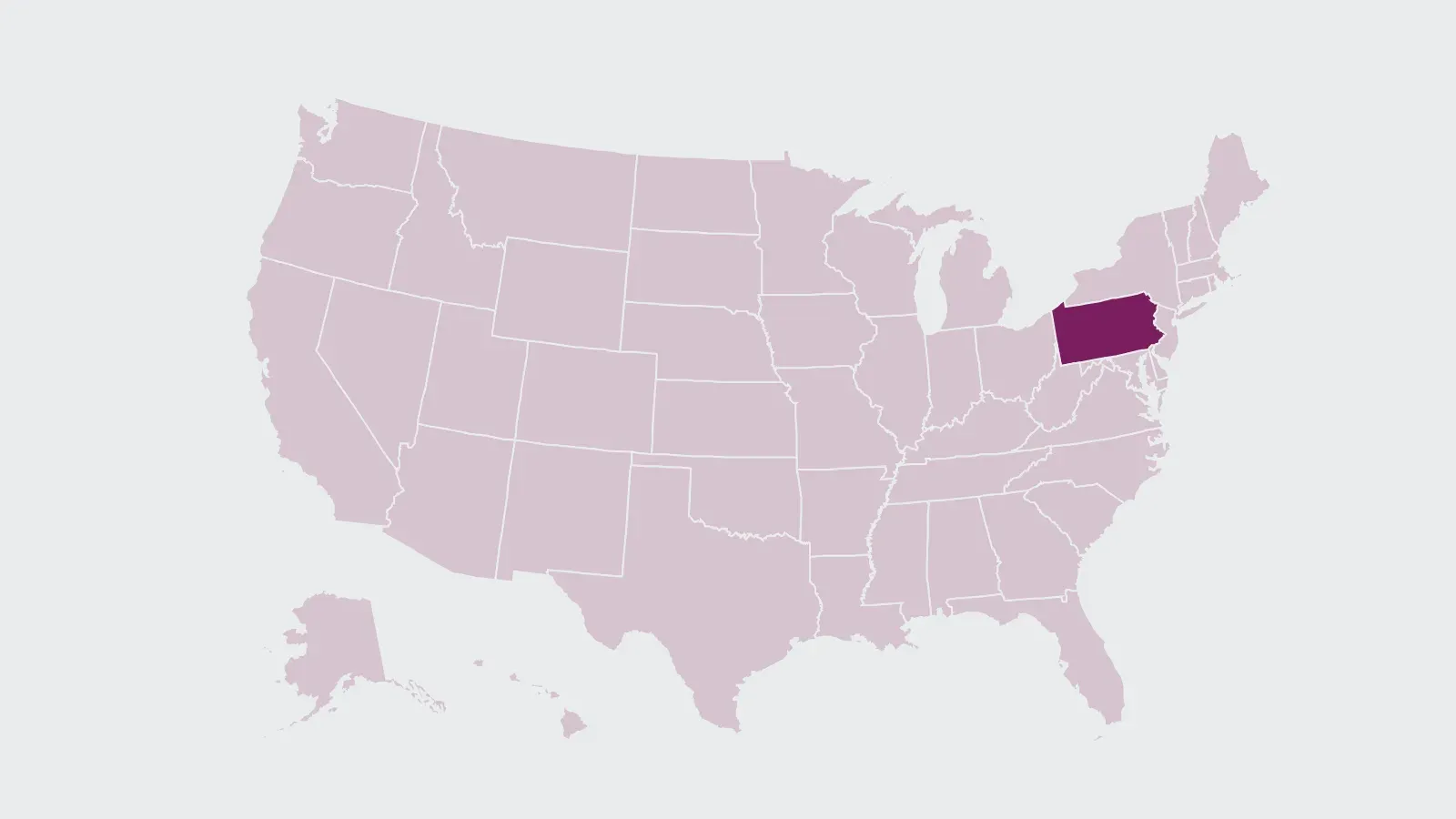
Price tier on the map
$1,000 to $1,249 a year
- Minimum liability limits
- 15/30/5
- Plus $5,000 medical benefits; full tort unless you choose limited tort; UM/UIM optional
- Credit-based insurance scores
- Allowed, not to raise a rate at renewal
- Pennsylvania Insurance Department auto insurance guide
- Regulator
- Pennsylvania Insurance Department
Pennsylvania's average bill in context
The National Association of Insurance Commissioners (NAIC) reports what insurers charged per insured car in each state. In 2023, the latest year it has published by state, the Pennsylvania average expenditure was $1,155, up 13% from $1,018 in 2022. This average includes cars insured for liability only as well as fully covered ones. A car with liability, collision and comprehensive together cost $1,274 on average.
| Coverage | Pennsylvania | United States |
|---|---|---|
| Liability | $567 | $737 |
| Collision | $465 | $464 |
| Comprehensive | $241 | $238 |
| All three (combined premium) | $1,274 | $1,438 |
| Average expenditure | $1,155 | $1,282 |
The whole difference from the national average sits in liability: $567 against $737. Collision and comprehensive, the coverages for your own car, were within a few dollars of the U.S. figures. On a fully covered car, then, the cost of protecting your own vehicle looks much like it does elsewhere, and the deductible you pick on those lines is one of the few numbers you control. Where you live still matters; see how location sets a price.
The minimum Pennsylvania policy
You must carry insurance to drive legally in Pennsylvania. The Pennsylvania Insurance Department lists three required coverages: medical benefits of at least $5,000, bodily injury liability of $15,000 per person and $30,000 per accident, and property damage liability of $5,000. Some insurers sell a $35,000 combined single limit that satisfies both liability minimums.
- Uninsured and underinsured motorist coverage appear among the optional coverages. They pay for injuries to you, relatives in your household and your passengers when an at-fault driver has no insurance or too little, but not for property damage.
- Stacking applies by default. It multiplies your uninsured or underinsured limit by the number of vehicles on the policy; rejecting it lowers your premium and your protection.
- Collision and comprehensive are optional under state law; a lender will usually require them.
With limits this low, a single crash can exceed a minimum policy quickly. The Insurance Research Council estimates that 11.0% of Pennsylvania drivers were uninsured in 2023. Our page on limits and deductibles helps you decide how much more to buy.
Full tort or limited tort
Pennsylvania asks you to choose how much of your right to sue you keep. Full tort leaves you free to sue a negligent driver for all damages, including pain and suffering. Limited tort gives up the right to recover pain-and-suffering damages unless one of the exceptions in the law applies, and in return the Insurance Department says it offers significant savings on your premium. If you don't specifically choose limited tort, you are treated as having chosen full tort.
The department doesn't put a dollar figure on the difference, and it varies by insurer, so ask for both prices on the same quote, then check your policy documents to confirm which option you have. Our guide to reading your declarations page walks through the coverages, limits and deductibles listed there.
What Pennsylvania insurers can't price on
By law, Pennsylvania insurers may not charge different rates based on an applicant's race, religion, national origin or gender. So a man and a woman with the same record, car and address should not be quoted differently for being a man or a woman; more on gender and marital status as rating factors.
Some companies use credit history when setting a premium, but the Insurance Department says they cannot use it to increase your rate when you renew.
If no company will insure you, often because of your driving history, the Pennsylvania Assigned Risk Plan offers coverage. Every insurer that writes car insurance in the state takes part, and applicants are assigned to companies in proportion to their share of the market. The plan is reached through AIPSO at 800-477-6146; expect to pay more than in the regular market.
Ways to lower a Pennsylvania premium
- Get at least three quotes, as the Insurance Department advises, with the same coverages and limits on each, and read the exclusions.
- Price both tort options. Limited tort costs less; decide whether the savings are worth the right you give up.
- Claim the 55-and-over discount. State law requires at least 5% off for each vehicle when every named insured is 55 or older and has completed a PennDOT-approved driver improvement course. The course has to be repeated every three years, and a chargeable accident, a moving violation conviction, or a DUI conviction or ARD can end the discount.
- Call the Insurance Department at 1-877-881-6388 if your insurer won't resolve a question or complaint.
Questions drivers ask
Is car insurance in Pennsylvania cheaper than the national average?
On NAIC's 2023 figures, yes: $1,155 per insured car against $1,282 nationally. The gap comes from liability; collision and comprehensive were close to the U.S. averages.
What is the minimum car insurance in Pennsylvania?
Medical benefits of $5,000, bodily injury liability of $15,000 per person and $30,000 per accident, and property damage liability of $5,000.
Does limited tort save money in Pennsylvania?
The Insurance Department says limited tort offers significant savings, but you give up the right to recover pain-and-suffering damages unless an exception applies. Full tort applies unless you choose limited tort.
Can Pennsylvania insurers charge women and men different rates?
No. Pennsylvania law prohibits rates based on an applicant's race, religion, national origin or gender.
Can my credit raise my Pennsylvania rate at renewal?
Some companies use credit history to set a premium, but the Insurance Department says it cannot be used to increase your rate when you renew. See credit-based insurance scores.
Where the figures come from
- NAIC — Auto Insurance Database Report 2022/2023 (state average premiums and expenditures)
- Pennsylvania Insurance Department — Auto insurance
- Pennsylvania Insurance Department — Auto insurance guide (PDF)
- Pennsylvania Insurance Department — How to shop for auto insurance (PDF)
- U.S. Bureau of Labor Statistics — CPI, table 2 (motor vehicle insurance)
- Insurance Information Institute — Uninsured motorists (Insurance Research Council estimates)
Facts on this page were checked against these sources on October 26, 2026. NAIC averages are for 2023, the latest year the NAIC has published by state.
Have your rate shopped
Averages can't price your car and your record. Tell us the basics of your policy and Guardbrook passes them to licensed insurance agents and insurers who can quote it; you decide whether to switch.
- 1 Your cars, drivers and current policy.
- 2 How agents can reach you, and your consent.
- 3 A licensed insurance agent or insurer contacts you with quotes. Your policy stays as it is until you decide to switch.
Guardbrook is not an insurance company or agency and doesn't sell, quote or bind policies. You pay Guardbrook nothing; the licensed insurance agents and insurers who contact you set their own prices and terms. How we make money.
Read next
-
Price factor
Gender and marital status
Six states ban gender in car insurance pricing; HI, MA and MI also bar marital status. How it works elsewhere.
-
Shopping guide
Reading your declarations page
Drivers, cars, limits such as 50/100/50, deductibles, rejected coverages, required discounts and the premium.
-
Way to save
Defensive driving course discount
At least 10% in Minnesota for drivers 55+, 10% in Delaware at any age. State rules, how long it lasts, how to claim.