Where it sleeps
How where you live changes your car insurance price
The same driver and car can cost very different amounts a few miles apart. Here is what location measures, how big the gaps are and what you control.
By Guardbrook Editorial Team Updated 7 min read
At a glance
- Highest state, 2023
- Florida, $1,864
- Lowest state, 2023
- North Dakota, $808
- Comprehensive by state
- $117 to $473
- ZIP codes barred
- Michigan
Bottom line
Insurers price your policy partly on where the car is usually kept, its garaging address. The Texas Department of Insurance notes that rates are higher in cities and can vary between ZIP codes in the same city. The spread is wide: in 2023 the average yearly spend per insured car ran from $808 in North Dakota to $1,864 in Florida, and the comprehensive line alone ranged from $117 to $473. Michigan stands out: its 2019 reform bars ZIP codes in setting a driver's rates. You can't change your neighborhood for a quote, but you can report it correctly, re-shop when you move and tune the coverages that location pushes up.
What "location" means on a quote
When you ask for a quote, the insurer wants the address where the car is usually parked overnight, often called the garaging address. That is usually your home, but not always: a car kept at a second home or at college may be garaged somewhere else. The Texas Department of Insurance (TDI) says it plainly: rates are based on where a car is usually located. Its consumer guide adds that rates are higher if you live in a city and can also vary between ZIP codes in the same city.
Location reflects risks a single driver can't control: how much traffic there is, how often cars are stolen, what hail, floods and storms do, and what repairs and medical care cost in the area. Each insurer decides how to price areas in its own filed rating plan, which is one reason two companies can quote the same address very differently.
How big the differences are
The National Association of Insurance Commissioners (NAIC) publishes what insurers collected per insured car in every state. Its 2023 figures, the latest by state, show how far apart states sit before anything about you is priced in.
| Place | Average expenditure | Compared with the U.S. |
|---|---|---|
| Florida | $1,864 | +45% |
| Washington, D.C. | $1,677 | +31% |
| United States | $1,282 | — |
| Maine | $856 | −33% |
| North Dakota | $808 | −37% |
The lines of the bill don't move together. Comprehensive pays for damage that isn't a collision, such as hail, flooding and theft, and it swings widely from state to state. In 2023 it averaged $473 in South Dakota, $447 in Colorado and $400 in Texas, against $238 nationally and $117 in Hawaii. Florida's high total came mostly from liability, which at $1,294 was the largest liability figure in the 2023 table.
Where you live also changes who you are likely to share the road with. The Insurance Research Council estimated that 15.4% of U.S. drivers were uninsured in 2023, but the share ran from 5.7% in Maine to 28.2% in Mississippi. The higher it is where you drive, the more often an at-fault driver may have no insurance to pay for your injuries, and the more uninsured motorist coverage is worth to you. Our page on limits and deductibles shows how to size it.
Where states limit location pricing
Rates are filed with each state's insurance regulator, and location is a common part of those filings. A few rules narrow how it can be used:
- Michigan. The 2019 auto insurance reform lists ZIP codes among the non-driving factors, along with sex, marital status, home ownership, credit score, education and occupation, that insurers can't use in setting a driver's rates, according to the state's Department of Insurance and Financial Services.
- Credit-based insurance scores. Some states keep your address out of the credit side of pricing. In Arizona (A.R.S. § 20-2110), Colorado (C.R.S. § 10-4-116) and Georgia (O.C.G.A. § 33-24-91), an insurance score can't be built from your address or ZIP code; New Jersey's scoring rules also exclude address.
These rules limit specific uses; they don't make prices the same everywhere in a state. Your state page names the regulator that reviews rate filings and takes complaints. Our page on credit-based insurance scores covers the other credit limits.
When you move, or keep the car somewhere else
A move can raise or lower your premium even when nothing else changes, because rates are based on where the car is usually kept. Moving to another state goes further: the policy has to meet that state's required coverages, which can differ a lot. Texas requires 30/60/25 liability and attaches personal injury protection unless you reject it in writing, while Michigan policies are no-fault and default to 250/500 bodily injury limits. You will also need to register the car in the new state, and the policy should be in place before the old one ends.
- Tell your insurer before or right after you move. The price is set for the address on the policy.
- Give the address where the car really sleeps. If the policy lists an address where the car isn't kept, the price rests on wrong information, and that can cause problems with a claim or the policy. Ask your insurer how it handles a car kept at another address.
- Tell the insurer about a student away at school. TDI advises telling your insurance company if you have a child living in another city for school. Ask, too, how a car kept at a second home is handled.
What you can do about a location-driven price
- Re-shop after a move. Your current insurer's prices for the new area may not be competitive; get quotes on the same limits and deductibles from two or three companies.
- Look hard at comprehensive if you live where hail, floods or theft drive it up. A higher comprehensive deductible lowers that line; test it with the deductible break-even calculator.
- Ask about anti-theft and safety discounts. Maine's Bureau of Insurance, for one, lists anti-theft devices among the discounts insurers commonly offer; see vehicle safety and anti-theft discounts.
- Check the other lines of the bill. Location is fixed once you live somewhere; your record, your car, your mileage and your coverage choices are not.
Questions drivers ask
Why did my car insurance go up when I moved across town?
Insurers price the area where the car is usually kept, and rates can differ even between ZIP codes in the same city. Re-shop: another company may price your new area differently.
Can I use a relative's address to get a lower rate?
Give the address where the car is really kept. A policy priced on an address where the car isn't kept rests on wrong information, which can cause problems with a claim or the policy. If the car is kept somewhere else, tell the insurer.
Which state bars ZIP codes in car insurance pricing?
Michigan's 2019 reform bars insurers from using ZIP codes, among other non-driving factors, in setting a driver's rates. See our Michigan cost page.
Is car insurance cheaper in rural areas?
Often. The Texas Department of Insurance notes that rates are higher if you live in a city. But location bundles many risks, and an area with frequent hail or theft can still have costly comprehensive coverage. Compare quotes for your own address.
Where the figures come from
- NAIC — Auto Insurance Database Report 2022/2023 (state average premiums and expenditures)
- Michigan DIFS — Consumer protections in the auto insurance law
- Texas Department of Insurance — Auto insurance guide (how companies decide what to charge)
- Arizona Revised Statutes § 20-2110 — Use of credit history
- C.R.S. § 10-4-116 — Use of credit information (colorado.public.law)
- O.C.G.A. § 33-24-91 — Use of credit information (Onecle)
- New Jersey DOBI — Insurance scoring consumer guide
- Maine Bureau of Insurance — Auto insurance discounts
- Insurance Information Institute — Uninsured motorists (Insurance Research Council estimates)
Facts on this page were checked against these sources on October 26, 2026. NAIC averages are for 2023, the latest year the NAIC has published by state; your own address can sit well above or below its state's figure.
Have your rate shopped
Averages can't price your car and your record. Tell us the basics of your policy and Guardbrook passes them to licensed insurance agents and insurers who can quote it; you decide whether to switch.
- 1 Your cars, drivers and current policy.
- 2 How agents can reach you, and your consent.
- 3 A licensed insurance agent or insurer contacts you with quotes. Your policy stays as it is until you decide to switch.
Guardbrook is not an insurance company or agency and doesn't sell, quote or bind policies. You pay Guardbrook nothing; the licensed insurance agents and insurers who contact you set their own prices and terms. How we make money.
Read next
-
State cost
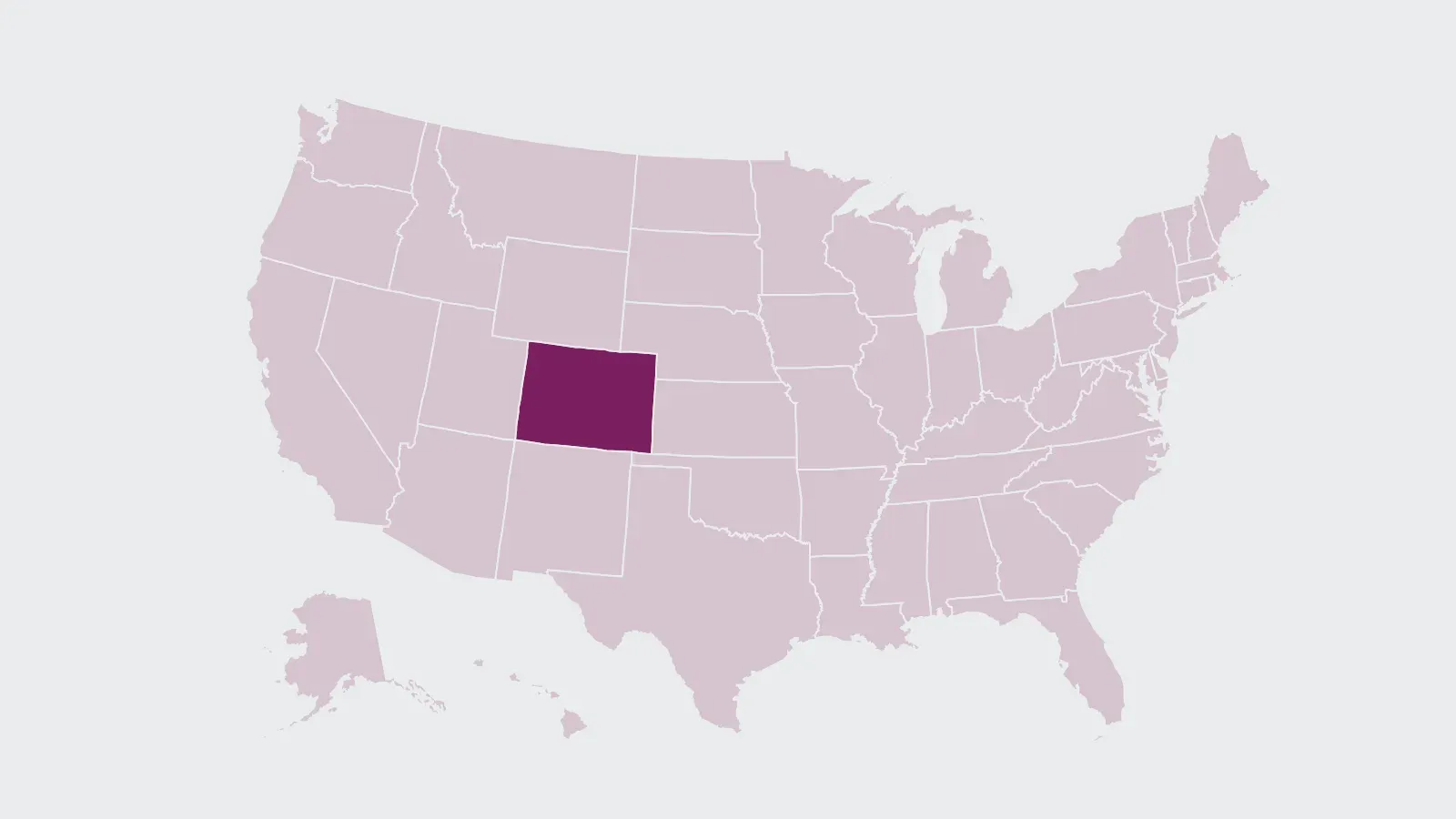
Colorado
$1,453 average spend in 2023 (+13% vs. U.S.); full coverage $1,655; 25/50/15 minimum; $5,000 MedPay unless rejected.
-
Price factor
Vehicle make and model
The car drives collision and comprehensive, $464 and $238 a year on average in 2023. How to check a model first.
-
Shopping guide
When to shop for car insurance
Renewal notices (45 days ahead in Maryland), moves, new cars and drivers, and old tickets that stop counting.