$1,250–$1,499 tier
What car insurance costs in Connecticut
Connecticut's average premium broken down and compared with the U.S., the coverage every policy must carry, and the discounts and help the state offers.
By Guardbrook Editorial Team Updated 5 min read
At a glance
- Average yearly spend, 2023
- $1,394
- Change from 2022
- +9%
- Minimum liability limits
- 25/50/25
- Uninsured drivers, 2023
- 11.8%
Bottom line
Connecticut drivers spent an average of $1,394 per insured car in 2023, about 9% above the U.S. average of $1,282; a fully covered car averaged $1,508. Liability is the costly line. The state requires 25/50/25 liability plus uninsured/underinsured motorist coverage of at least 25/50, and drivers 60 and older can earn a discount for an approved accident prevention course.
The Connecticut bill, line by line
Guardbrook
Average car insurance bill, 2023
Connecticut
Liability$854
Collision$478
Comprehensive$177
Full coverage$1,508
Average spend per car$1,394
Compared with the U.S.+9%
Uninsured drivers11.8%
Average yearly premiums per insured car (NAIC); uninsured share: Insurance Research Council estimate. Averages, not a quote. Where these numbers come from
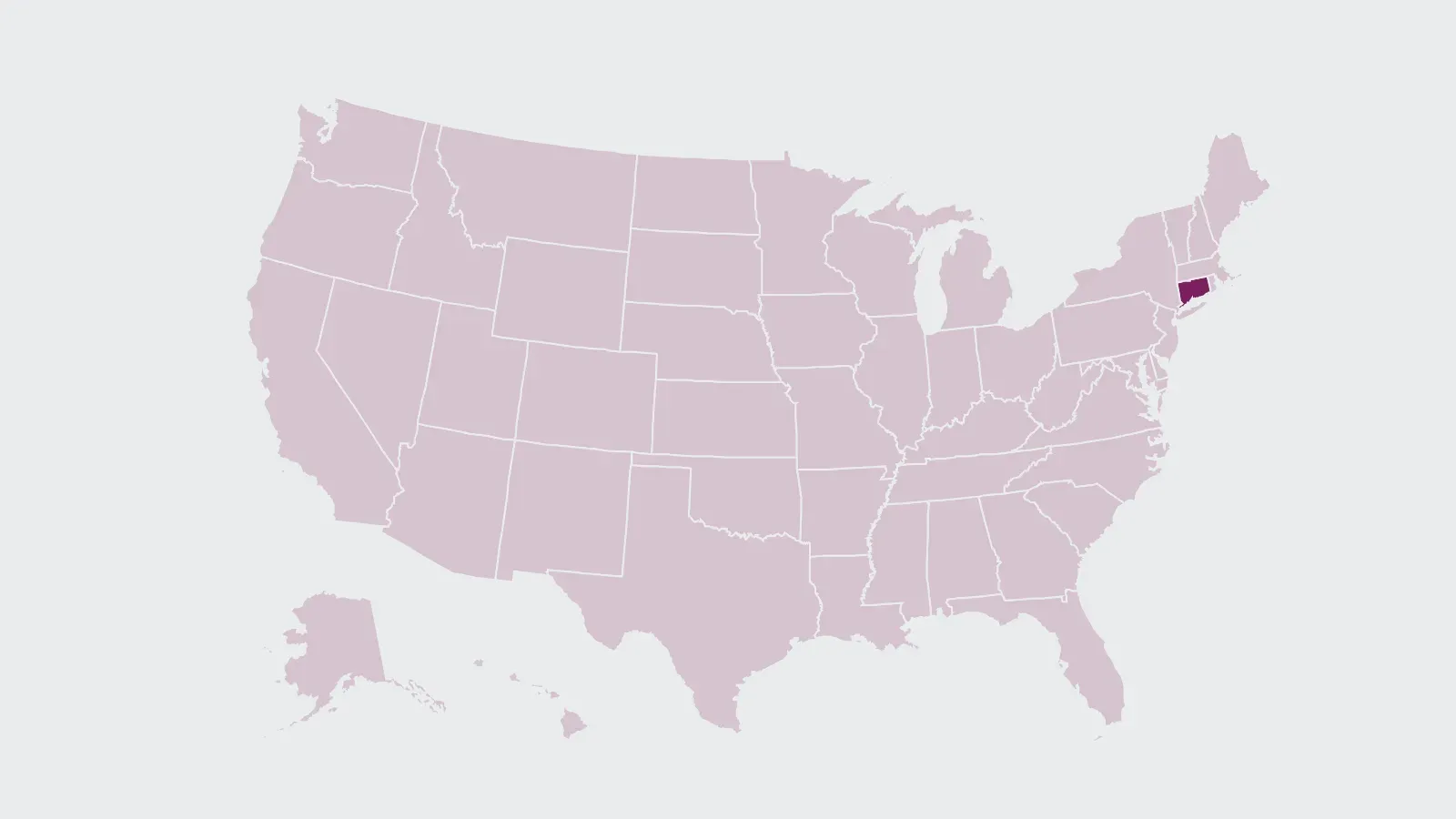
Price tier on the map
$1,250 to $1,499 a year
- Minimum liability limits
- 25/50/25
- Uninsured/underinsured motorist coverage of at least 25/50 also required
- Credit-based insurance scores
- Allowed
- Listed as a classification factor in Insurance Department Bulletin PC-68
- Regulator
- Connecticut Insurance Department
Connecticut's bill compared with the U.S.
The National Association of Insurance Commissioners (NAIC) publishes what insurers charged per insured car in each state. Its 2023 data, the most recent by state, show a Connecticut average expenditure of $1,394, up 9% from $1,279 in 2022, a smaller rise than the 14% national increase. A car with liability, collision and comprehensive averaged $1,508.
| Coverage | Connecticut | United States |
|---|---|---|
| Liability | $854 | $737 |
| Collision | $478 | $464 |
| Comprehensive | $177 | $238 |
| All three (combined premium) | $1,508 | $1,438 |
| Average expenditure | $1,394 | $1,282 |
Liability does most of the work here. At $854 it was about 16% above the national average, while comprehensive, at $177, was about 26% below and collision was close to the U.S. figure. Because every driver buys liability, it lifts the average for liability-only and fully covered cars alike. Your own price depends on your age, record and town; see how age and experience affect price.
Coverage Connecticut requires
The Connecticut Insurance Department lists the minimum liability as $25,000 per person and $50,000 per accident for bodily injury, and $25,000 per accident for property damage: 25/50/25. The department strongly urges drivers to consider higher limits.
- Uninsured/underinsured motorist coverage of at least $25,000 per person and $50,000 per accident is required (Conn. Gen. Stat. § 38a-336). The Insurance Research Council estimated 11.8% of Connecticut drivers were uninsured in 2023.
- Collision and comprehensive aren't required by law, though a lender or leasing company may require them.
- Cancellations are reported. Insurers must notify the Department of Motor Vehicles when a policy is canceled.
Higher uninsured motorist limits cost more, but they decide how much you can collect when the other driver has little or no insurance. Our guide to limits and deductibles shows how to weigh them.
How Connecticut reviews prices
Insurers file personal auto rates with the Connecticut Insurance Department. A department bulletin on personal auto rate filings (PC-68) says base rates for bodily injury liability and uninsured/underinsured motorist coverage are subject to prior approval unless they are part of a "flex" filing, which follows separate rules. The same bulletin lists credit among the classification factors insurers use, alongside age, vehicle type, mileage and driving history.
In other words, credit-based insurance scores are part of Connecticut auto pricing, and a change in how a company uses credit has to be supported in its filing. Because companies weigh factors differently, the same driver can see a wide spread of prices. Read more on credit-based insurance scores.
For drivers no insurer will take
The Connecticut Automobile Insurance Assigned Risk Plan, administered by AIPSO, is for drivers who have tried and failed to get insurance in Connecticut within the previous 60 days. Applicants must certify that, and show they couldn't get coverage at rates no higher than the plan's. Our guide to assigned-risk plans explains the process.
Lowering a Connecticut premium
- Shop every year. The Insurance Department recommends shopping around yearly; compare at least three quotes on the same limits.
- Use the senior course discount. State law (Conn. Gen. Stat. § 38a-683) requires a discount of at least 5% for at least 24 months for a principal operator aged 60 or older who completes an approved accident prevention course. More in our course discount guide.
- Ask about anti-theft devices. The department notes that they may help lower your premium.
- Get help from the department. Its Consumer Affairs Division is at (860) 297-3900; the toll-free line is (800) 203-3447, and complaints can be filed online.
Questions drivers ask
Is car insurance more expensive in Connecticut than the national average?
Yes, modestly. NAIC's 2023 figures put the Connecticut average at $1,394 per insured car against $1,282 nationally; full coverage averaged $1,508 against $1,438.
What car insurance does Connecticut require?
Liability of at least 25/50/25 and uninsured/underinsured motorist coverage of at least $25,000 per person and $50,000 per accident.
Is there a senior discount for car insurance in Connecticut?
Yes. A principal operator aged 60 or older who completes an approved accident prevention course gets a discount of at least 5% for at least 24 months.
Do Connecticut insurers use credit?
Yes. A Connecticut Insurance Department bulletin lists credit among the classification factors in personal auto rate filings. See credit-based insurance scores.
Where the figures come from
- NAIC — Auto Insurance Database Report 2022/2023 (state average premiums and expenditures)
- Connecticut Insurance Department — What is auto insurance?
- Connecticut Insurance Department — Auto insurance information center
- Connecticut Insurance Department — Bulletin PC-68, personal automobile insurance rate filings
- Connecticut Public Act 10-53 — Accident prevention course discount (Conn. Gen. Stat. § 38a-683)
- Connecticut DMV — Insurance requirements
- AIPSO — Connecticut Automobile Insurance Assigned Risk Plan
- Insurance Information Institute — Uninsured motorists (Insurance Research Council estimates)
Facts on this page were checked against these sources on October 26, 2026. NAIC averages are for 2023, the latest year the NAIC has published by state.
Have your rate shopped
Averages can't price your car and your record. Tell us the basics of your policy and Guardbrook passes them to licensed insurance agents and insurers who can quote it; you decide whether to switch.
- 1 Your cars, drivers and current policy.
- 2 How agents can reach you, and your consent.
- 3 A licensed insurance agent or insurer contacts you with quotes. Your policy stays as it is until you decide to switch.
Guardbrook is not an insurance company or agency and doesn't sell, quote or bind policies. You pay Guardbrook nothing; the licensed insurance agents and insurers who contact you set their own prices and terms. How we make money.
Read next
-
Price factor
Age and driving experience
Teens have almost 3x the fatal crash rate of drivers 20+; HI, MA and NC limit age rating. Course discounts from 55.
-
Way to save
Defensive driving course discount
At least 10% in Minnesota for drivers 55+, 10% in Delaware at any age. State rules, how long it lasts, how to claim.
-
Shopping guide
Switching insurers without a gap
Start the new policy first, cancel in writing, tell the lender. A North Carolina lapse can cost up to $200 in fees.